

Sleeve gastrectomy is now the most commonly performed weight-loss operation in the world. It is done by keyhole (laparoscopic) surgery, takes no bypass of the intestine, and changes both how much you can eat and how hungry you feel.
How does it work?
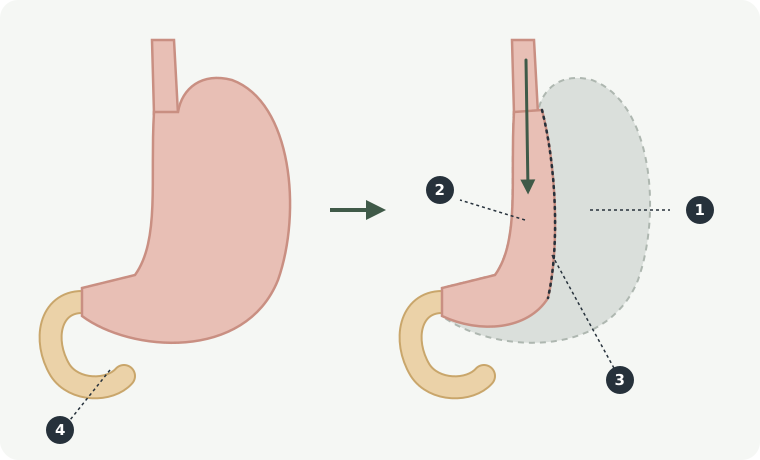
Left: the normal stomach. Right: after a sleeve gastrectomy.
- The removed part. About 75–80% of the stomach, including the upper curved part (the fundus) that produces most of the hunger hormone, ghrelin.
- The new stomach (the "sleeve"). A narrow tube along the inner curve of the stomach.
- The staple line. The stomach is divided and sealed with surgical staples.
- The normal path. Food continues into the duodenum and small intestine exactly as before; nothing is bypassed.
The sleeve works in two ways. You feel full after much smaller portions, and because the ghrelin-producing part is gone, hunger and cravings usually drop noticeably. The operation also changes other gut hormones that control blood sugar.
Who is it suitable for?
According to the current international guidelines (ASMBS/IFSO 2022), weight-loss surgery is recommended for adults with:
- a body mass index (BMI) of 35 or more, with or without related health problems, or
- a BMI of 30–34.9 with a metabolic disease such as type 2 diabetes, especially if other treatments haven't worked.
The sleeve is often a good choice for people who:
- want a single operation without rerouting the intestine
- take medicines that must be absorbed normally (for example some psychiatric or anti-epileptic drugs)
- have bowel conditions or previous bowel surgery that make a bypass harder
It may be less suitable if you have severe acid reflux or Barrett's oesophagus, because a sleeve can make reflux worse. In that case a gastric bypass is usually preferred. Your assessment will help decide.
Use our BMI calculator to check your BMI.
The operation step by step
- Before surgery: blood tests, an ultrasound and often an upper endoscopy, plus a short low-calorie diet for 1–2 weeks to shrink the liver and make surgery safer.
- The operation: under general anaesthesia, through 4–5 small incisions. It usually takes under an hour.
- Hospital stay: typically 1–2 nights. You walk on the day of surgery and start sipping fluids early.
Expected results
Most patients lose about 55–70% of their excess weight within 12–18 months. Weight loss is fastest in the first six months and then slows down. Long-term results depend on eating habits, activity and follow-up.
Many weight-related conditions improve or resolve, including type 2 diabetes, high blood pressure, sleep apnoea, fatty liver and joint pain. Fertility often improves too, so contraception is important (see below).
Risks
Sleeve gastrectomy is a safe operation in experienced hands, but like any surgery it carries risks:
- Leak from the staple line (uncommon, around 1%). It usually shows as fever, a fast heart rate or new pain in the first days or weeks, and needs urgent assessment.
- Bleeding from the staple line, usually in the first 24 hours.
- Reflux (heartburn): new or worse reflux affects a meaningful number of patients. It is often controlled with medication; a few people later need conversion to a bypass.
- Narrowing of the sleeve, which can cause vomiting and may need endoscopic treatment.
- Blood clots, which is why we give blood-thinning injections and encourage early walking.
- Gallstones, linked to rapid weight loss.
- Vitamin deficiencies, prevented by daily supplements.
Life after a sleeve
Recovery follows four diet stages over about six weeks: liquids, purée, soft food, then normal food in small portions. You will take vitamins for life and have regular blood tests. Pregnancy should wait 12–18 months.
Our bariatric patient guide explains every stage week by week, including warning signs and when to call us.
How does it compare with other operations?
| Sleeve gastrectomy | Mini gastric bypass | Classic (Roux-en-Y) bypass | |
|---|---|---|---|
| How it works | Smaller stomach + lower hunger hormones | Narrow pouch + bypass of 150–200 cm of intestine | Small pouch + bypass of part of the intestine |
| Intestinal connections | None | One | Two |
| Typical excess weight loss | 55–70% | 70–80% | 60–75% |
| Effect on type 2 diabetes | Good | Very strong | Very strong |
| Reflux | May get worse | Bile reflux possible | Best choice for reflux |
| Vitamins | Lifelong | Lifelong, closer monitoring | Lifelong, closer monitoring |
| Reversible | No | Yes, can be revised | Technically possible, rarely done |
Read more: Mini gastric bypass · Classic gastric bypass · Laparoscopic vs open surgery
Is a sleeve right for you?
The right operation depends on your weight, health conditions, reflux, medications and goals. In your consultation we review these together and agree on the safest, most effective option for you.
Book an assessment or message us on WhatsApp.
This article is for patient education and does not replace a medical consultation.
References: Eisenberg D, et al. 2022 ASMBS and IFSO Indications for Metabolic and Bariatric Surgery. Surg Obes Relat Dis 2022. · Peterli R, et al. Laparoscopic sleeve gastrectomy vs Roux-en-Y gastric bypass (SM-BOSS). JAMA 2018. · Salminen P, et al. Laparoscopic sleeve gastrectomy vs Roux-en-Y gastric bypass (SLEEVEPASS). JAMA 2018.