

The Roux-en-Y gastric bypass (RYGB), often called the "classic" bypass, has been performed for decades and is the operation with the longest track record in weight-loss surgery. It is especially valuable for patients with acid reflux or type 2 diabetes.
How does it work?
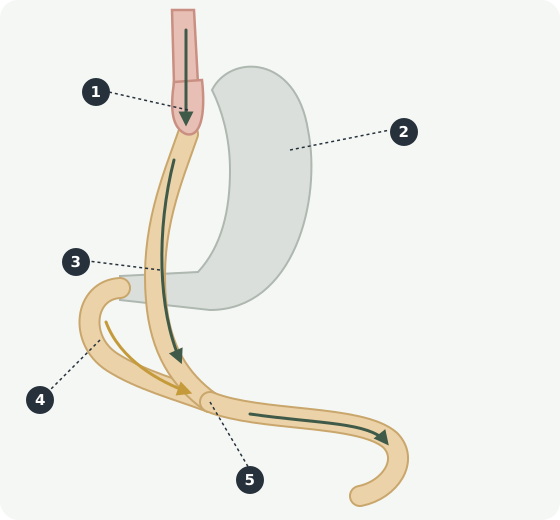
The green arrows show the path of food; the yellow arrow shows bile and digestive juices.
- A small stomach pouch of about 30 ml, roughly the size of an egg.
- The bypassed stomach. It stays in place, is not removed, and keeps producing digestive juices.
- The food limb (Roux limb). A loop of small intestine connected to the pouch, carrying food.
- The bile limb. Carries bile and pancreatic juices from the bypassed stomach and duodenum.
- The Y-junction. Here the two limbs join, and food mixes with digestive juices for absorption.
It works through a small pouch that fills quickly, strong changes in gut hormones that reduce hunger and improve blood sugar, and reduced absorption of some calories. Because acid-producing stomach is separated from the pouch and bile is diverted away, reflux usually improves markedly.
Who is it suitable for?
Surgery is recommended for adults with a BMI of 35 or more, or 30–34.9 with type 2 diabetes or another metabolic disease (ASMBS/IFSO 2022). The classic bypass is particularly suited to:
- people with significant acid reflux, a hiatus hernia, or Barrett's oesophagus
- people with type 2 diabetes
- patients with reflux or weight regain after a previous sleeve gastrectomy (conversion to bypass)
It may be less suitable for people who need long-term anti-inflammatory medicines, heavy smokers who cannot stop, or anyone unable to commit to lifelong vitamins and follow-up.
The operation step by step
- Before surgery: blood tests, ultrasound, usually an upper endoscopy, and a 1–2 week low-calorie diet to shrink the liver.
- The operation: laparoscopic, through 4–5 small incisions under general anaesthesia, usually around 1.5–2.5 hours.
- Hospital stay: usually 1–2 nights. You walk on the same day and start with sips of fluid.
Expected results
Most patients lose about 60–75% of their excess weight within 12–18 months, with good long-term durability. Type 2 diabetes improves or goes into remission in many patients, often within weeks, before major weight loss. Reflux, blood pressure, cholesterol, sleep apnoea and fatty liver commonly improve.
If you take diabetes or blood-pressure medicines, we adjust the doses with you after surgery. Never change them yourself.
Risks
- Ulcer at the pouch connection (marginal ulcer): the main avoidable risk. Smoking and anti-inflammatory painkillers (ibuprofen, diclofenac, aspirin) greatly increase it, so avoid both for life unless your surgeon advises otherwise.
- Internal hernia: rare and sometimes years later. Sudden, severe or cramping abdominal pain after a bypass needs urgent assessment.
- Dumping syndrome: sweating, palpitations, dizziness or diarrhoea after sugary or fatty food; sometimes low blood sugar 1–3 hours after eating.
- Nutritional deficiencies: iron, vitamin B12, calcium, vitamin D, prevented by lifelong supplements and blood tests.
- Leak, bleeding and blood clots: uncommon early complications, monitored closely.
- Gallstones, linked to rapid weight loss.
- Alcohol: absorbed much faster, with a higher risk of intoxication and dependence. Best avoided.
Life after a classic bypass
You go through four diet stages over about six weeks, avoid sugar and sweetened drinks, and take vitamins for life: usually a multivitamin, B12, iron, calcium and vitamin D. Blood tests are done at 3, 6 and 12 months, then yearly. Pregnancy should wait 12–18 months, and a coil or condoms are preferred over the pill.
Our bariatric patient guide walks you through each week of recovery.
How does it compare with other operations?
| Sleeve gastrectomy | Mini gastric bypass | Classic (Roux-en-Y) bypass | |
|---|---|---|---|
| How it works | Smaller stomach + lower hunger hormones | Narrow pouch + bypass of 150–200 cm of intestine | Small pouch + bypass of part of the intestine |
| Intestinal connections | None | One | Two |
| Typical excess weight loss | 55–70% | 70–80% | 60–75% |
| Effect on type 2 diabetes | Good | Very strong | Very strong |
| Reflux | May get worse | Bile reflux possible | Best choice for reflux |
| Vitamins | Lifelong | Lifelong, closer monitoring | Lifelong, closer monitoring |
| Reversible | No | Yes, can be revised | Technically possible, rarely done |
Read more: Sleeve gastrectomy · Mini gastric bypass · Laparoscopic vs open surgery
Is a classic bypass right for you?
If you have reflux, diabetes or a previous sleeve that hasn't worked well, the classic bypass may be the best option. We decide together after a full assessment.
Book an assessment or message us on WhatsApp.
This article is for patient education and does not replace a medical consultation.
References: Eisenberg D, et al. 2022 ASMBS and IFSO Indications for Metabolic and Bariatric Surgery. Surg Obes Relat Dis 2022. · Peterli R, et al. (SM-BOSS). JAMA 2018. · Salminen P, et al. (SLEEVEPASS). JAMA 2018.